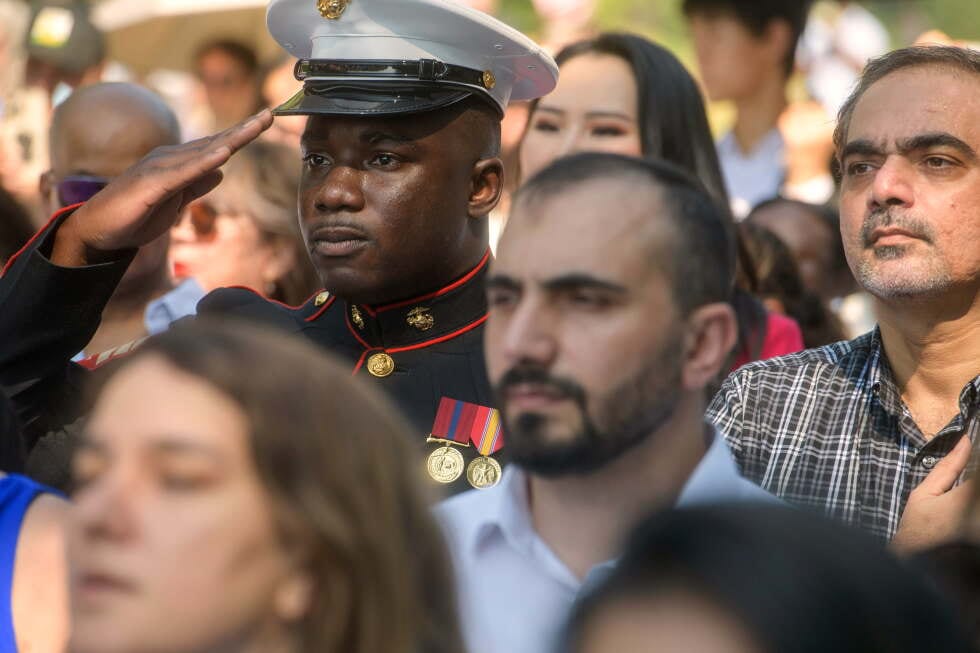
AP News reports that 150 people from 50 countries became U.S. citizens at George Washington’s Mount Vernon estate on July 4, a symbolic naturalization ceremony timed to the America 250 commemorations. The event turned the first president’s home into a July 4 backdrop for the country’s newest citizens, linking their futures to one of the most historic addresses in U.S. politics and culture.
The gathering of 150 candidates, drawn from every region of the world, put immigration and belonging at the center of Independence Day coverage this week. With national attention on the 250th anniversary era of the United States, the Mount Vernon event offered a highly visible reminder that the story of the country’s founding is still being extended by new arrivals taking the oath of allegiance.
Key facts
- Source
- AP News
- Reported
- July 4, 2026
- Desk
- general
- Follow the story
- Spinn Radio Talk
What AP News reported about the Mount Vernon ceremony
According to AP News, a group of 150 people from 50 countries took the oath of U.S. citizenship at George Washington’s Mount Vernon estate. That single detail sets the scale of the event: a full auditorium’s worth of new Americans, all completing a long legal process at one of the most symbolically charged venues in the country.
The outlet reported the story on July 4, 2026, which means the ceremony unfolded against the backdrop of Independence Day observances and the broader America 250 moment. For organizers and participants, tying naturalization to that date and that place highlights how immigration and founding-era history are being presented together to the public.
For anyone tracking how Independence Day is evolving, the key takeaway here is simple: at Mount Vernon, the focus was not only on George Washington’s legacy, but also on the 150 people who now share citizenship in the nation he helped establish.
“At Mount Vernon on July 4, the founding era and today’s immigration story shared the same stage.”
Why Mount Vernon matters for new U.S. citizens
George Washington’s Mount Vernon estate is one of the most recognizable historic sites in the United States, so staging a naturalization ceremony there carries obvious symbolic weight. The first president’s home is closely associated with the origins of U.S. self-government, which turns a routine legal step into something more like a civic ritual in a place where early national decisions were once shaped.
For the 150 people from 50 countries who became citizens, Mount Vernon provided a physical connection to the long arc of American history they are now part of. They are joining a political community that traces some of its most familiar myths and debates back to the era when Washington lived on that same property.
The lasting detail to remember is the juxtaposition: new Americans taking the oath of allegiance within sight of a founding president’s estate, at a time when the country is reflecting on 250 years of independence and how it renews itself through each new group of citizens.
“A routine legal milestone turned into a civic ritual by placing it in Washington’s own backyard.”
Spinn Radio
Follow live news on Spinn Radio
Who became citizens at this America 250 ceremony
AP News reports that the ceremony brought together people from 50 countries who have now become U.S. citizens. That mix underlines how globally diverse contemporary immigration to the United States remains, especially on a holiday that is often framed through historic battles and founding documents rather than modern migration flows.
Although the report does not list the individual countries, the number alone suggests a room where multiple languages, cultures, and migration stories intersected. In one ceremony, the legal category of “American” expanded to include people whose paths to Mount Vernon likely ran through very different regions and life experiences.
For readers trying to visualize the moment, the most concrete fact is this: on July 4, 2026, at a single venue associated with George Washington, 150 people from 50 distinct national backgrounds all became citizens together.
How this Mount Vernon event fits into America 250
The AP News story is framed explicitly in the context of America 250, the ongoing period of commemoration around the 250th anniversary of U.S. independence. As the country moves through that milestone era, ceremonies like the one at Mount Vernon show how institutions are using historic sites to underscore contemporary civic themes such as immigration, allegiance, and shared national identity.
By placing a modern naturalization ceremony at the home of the first president, organizers link the founding generation to today’s debates over who gets to belong and under what terms. The 150 new citizens are not part of the original 18th century narrative, yet their presence on that property during the America 250 observances signals that the story of the United States is still being actively written.
The key point for anyone tracking bicentennial and semiquincentennial programming is that America 250 is not only about museum exhibits and speeches. It is also about live legal and civic moments, like oaths of citizenship, staged in places that already carry heavy symbolic meaning.
“America 250 is being marked not only in exhibits, but in real oaths taken at the nation’s most storied addresses.”
What to watch next and where to follow coverage
The Mount Vernon ceremony highlights how naturalization events are becoming part of the public ritual of Independence Day and the America 250 milestone. As July 4 activities continue in coming years, more historic sites and civic institutions are likely to host similar gatherings that fuse immigration policy, personal milestone, and national story into a single televised moment.
AP News has put this particular Mount Vernon event on the national radar, but it is only one chapter in a longer series of stories about how new Americans are welcomed and where those ceremonies take place. Watching which venues are chosen, how many people are sworn in, and how frequently these events surface in national coverage will be a useful barometer of how central immigration remains to the way the United States narrates its own anniversary.
For continuing updates, live reaction, and broader conversation around this ceremony and other America 250 events, listeners can Follow live news and talk on Spinn Radio. The story of these 150 new citizens, and of those who will follow them, will continue to unfold in real time there.
“Which historic stages future ceremonies choose will say a lot about how America wants to tell its 250-year story.”
Good to know
Frequently asked questions
What happened at Mount Vernon on July 4, 2026?
On July 4, 2026, 150 people from 50 countries became U.S. citizens at George Washington’s Mount Vernon estate, as reported by AP News.
Why was the citizenship ceremony held at George Washington’s estate?
The ceremony at Mount Vernon used the symbolic weight of George Washington’s estate to link new citizens to the country’s founding history during the America 250 era.
How many countries were represented among the new citizens?
Fifty countries were represented among the 150 new U.S. citizens, highlighting the global diversity of modern immigration.
How does this citizenship event tie into America 250?
The Mount Vernon naturalization is part of the broader America 250 commemorations, using historic sites to frame contemporary civic moments like taking the oath of citizenship.
Explore more on Spinn Radio: Follow live news and talk on Spinn Radio
Sources