Daft Punk is back at stadium volume this summer, with Euronews reporting that One More Time has become the French team’s official 2026 World Cup goal song. More than a decade after it first owned club speakers, that synth riff is now blasting through global broadcasts and fan cams, proof that the duo’s hooks still move crowds in seconds.
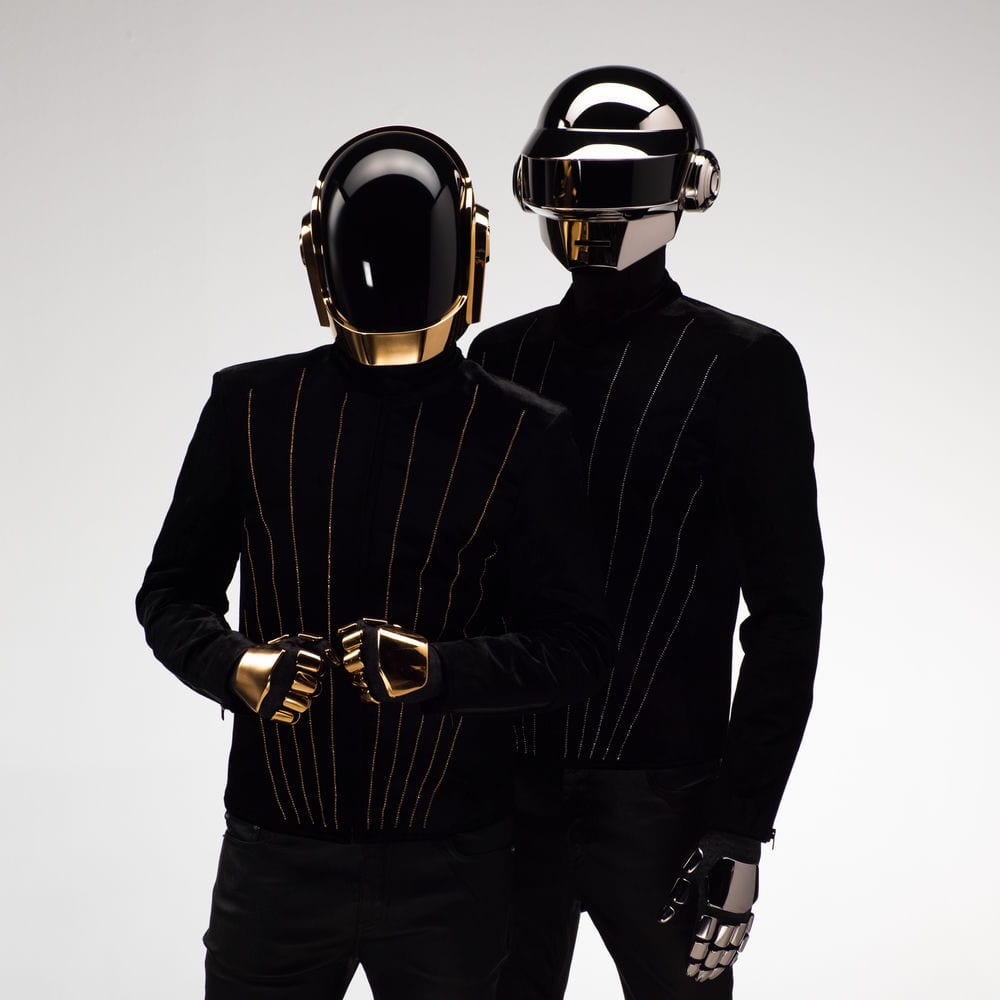
The Guardian is revisiting legendary live shows and The New York Times lists Daft Punk on World Cup playlists, while Rolling Stone is teasing “new works” from one of the duo’s stars. Even with the helmets offstage, Thomas Bangalter and Guy-Manuel de Homem-Christo keep pulling new listeners into their orbit: 6.4 million monthly listeners and over 415.8 million scrobbles worth of proof that their version of electronic, house and dance music has become a permanent reference point.
Key facts
- Monthly listeners
- 6.4M
- Total scrobbles
- 415.8M
- Genres
- electronic, House, dance, techno, electronica
- Signature tracks
- One More Time, Harder, Better, Faster, Stronger, Around the World, Something About Us, Digital Love
How Daft Punk went from Darlin’ guitars to French house legends
Before the helmets and vocoders, Thomas Bangalter and Guy-Manuel de Homem-Christo were in an indie rock band called Darlin’. When that project disbanded, they pivoted into machines and drum loops, forming Daft Punk in Paris in 1993 and drifting toward what would become the French house movement. Those early decisions, leaving guitars for groove‑driven production, set them on a path that reshaped club music far beyond France.
Their sound pulled house, funk, disco, techno, rock and synth‑pop into a single, repeatable formula: filter-heavy loops, rubbery bass, and melodies that feel simple until they lodge in your head for days. That mix put them at the center of electronic and house playlists, and it explains why today’s fans who arrive via festival EDM or techno rabbit holes still circle back to Daft Punk as a starting point.
If you want to hear that pivot from rock roots to sleek club architecture in one sitting, queue up Around the World right after anything by their earlier scene peers, then notice how every element is built to loop, not to jam.
“They walked away from indie guitars in Darlin’ and rewired the dancefloor instead.”
What the Daft Punk sound actually feels like in your headphones
Daft Punk is usually filed under electronic, house, dance, techno and electronica, but the emotional range inside those labels is what keeps people replaying them. One More Time is pure euphoria, all shimmering chords and a vocal chopped just enough to feel surreal, which makes it perfect as a World Cup goal anthem and as a 3 a.m. club closer. It is festival‑scale joy, compressed into a radio‑length track.
Then there is Harder, Better, Faster, Stronger, built on a mechanical vocal hook that somehow feels human. Each processed syllable rides over a tight, funky groove, sounding like a robot work song and a gym soundtrack at the same time. When people talk about electronic tracks that feel “alive, ” this is the reference point. Around the World strips things down even further, letting a simple bassline and that endlessly repeated title turn into something hypnotic.
For the opposite mood, Something About Us and Digital Love show their softer side. Both lean more into synth‑pop and slow‑motion disco, with melodies that suit late‑night headphones instead of peak‑time strobes. Put those four tracks in a row and you get the real picture of their sound: not just club tools, but a full emotional palette built from drum machines and vocoders.
“They can soundtrack a stadium goal, a warehouse rave and a 2 a.m. heartbreak playlist without changing instruments.”
Spinn Radio
Listen to Daft Punk on Spinn Radio
The essential Daft Punk tracks every new listener should start with
If you are new to Daft Punk, there is a short starter course that explains why so many producers, DJs and pop artists trace their path back to these two. Begin with One More Time, now echoing across the 2026 World Cup. Listen for how each section adds or subtracts elements, keeping the energy high without ever feeling frantic. That sense of control is part of why it crossed over from club hit to global anthem.
Follow it with Harder, Better, Faster, Stronger, which has become a shorthand for the duo’s chopped‑up vocal style and playful sense of rhythm. Then play Around the World, its looping vocal hook and bassline a masterclass in repetition that still feels inventive decades later. These three tracks alone justify their reputation as a backbone of modern dance music.
To see how they work outside pure party mode, queue Digital Love and Something About Us. The first wraps a wistful melody around crunchy synths, the second slows everything down into woozy, romantic electronica. Together, those five songs are a tight, 20‑odd‑minute proof that Daft Punk’s catalog is built to last, not to chase trends.
“One More Time, Harder, Better, Faster, Stronger, Around the World, Digital Love and Something About Us are the quickest way into the Daft Punk universe.”
Daft Punk’s French electronic peers you should explore next
Daft Punk did not invent their scene in a vacuum. If you are hooked on their mix of groove and gloss, the next move is to trace that French electronic thread outward. Justice push a rougher, more distorted version of similar ideas, turning choppy riffs and heavy compression into festival‑ready anthems. They sit on the same shelf as Daft Punk’s harder moments, sharing a love of rock textures inside club structures.
For something closer to Daft Punk’s sleek, filter‑disco side, Modjo are essential listening, especially if you recognize their breakout hit as a cousin to Daft Punk’s melodic, vocal‑driven house. Stardust is another key waypoint, linking directly back to Thomas Bangalter and the moment when French touch house was taking over. If the shimmering side of Daft Punk is your favorite, Stardust will feel immediately familiar.
From there, you can spin into the cinematic, neon‑lit sound of Kavinsky, whose retro synth lines suit fans of Daft Punk’s more atmospheric work. All of these artists are part of the same wider story that Daft Punk helped write, and you can find them on Spinn Radio right alongside the duo: start with Justice, Modjo and Stardust for a focused crash course.
“Follow the Daft Punk trail and you end up mapping an entire era of French electronic music.”
Why Daft Punk still matters to electronic and house music today
Daft Punk remains cited as an influence in electronic dance music because their approach to house, funk, disco, techno, rock and synth‑pop simply does not age. Producers still chase their blend of human feel and machine precision, and you can hear echoes of Harder, Better, Faster, Stronger and One More Time anytime a vocal chop or filter sweep takes over a current dance hit.
The numbers back up that legacy. With 6.4 million monthly listeners and more than 415.8 million scrobbles, listeners keep discovering them well after their peak radio years. Reporters from outlets like The Guardian and The New York Times still use Daft Punk as a benchmark when they talk about live shows, playlists and the sound of big tournaments, which tells you their catalog functions as shared cultural shorthand.
If you are exploring electronic or house on Spinn Radio, starting with Daft Punk is like starting rock with The Beatles: you hear not only great songs, but the foundations of what came next. Put on Around the World or Digital Love, then jump into newer names influenced by them, and you will feel how much of today’s dance music still spins on ideas Thomas Bangalter and Guy-Manuel de Homem-Christo sharpened in Paris in the 1990s.
“Listening to Daft Punk today is not nostalgia. It is the quickest way to understand why modern dance music sounds the way it does.”
Good to know
Frequently asked questions
When was Daft Punk founded?
Daft Punk was founded in 1993 in Paris by Thomas Bangalter and Guy-Manuel de Homem-Christo. They formed the duo after their previous indie rock band Darlin' broke up.
Who is in Daft Punk?
Daft Punk is the French electronic duo of Thomas Bangalter and Guy-Manuel de Homem-Christo. The two have worked together since forming the group in 1993 in Paris.
What genres is Daft Punk known for?
Daft Punk is known for electronic, house, dance, techno and electronica. Their music also weaves in funk, disco, rock and synth-pop elements.
What are Daft Punk’s most famous songs?
Daft Punk’s most famous songs include One More Time, Harder, Better, Faster, Stronger, Around the World, Something About Us and Digital Love. These tracks show their range from euphoric club anthems to intimate electronic ballads.
What band was Daft Punk in before Daft Punk?
Before forming Daft Punk, Thomas Bangalter and Guy-Manuel de Homem-Christo played in an indie rock band called Darlin'. When Darlin' disbanded, they shifted their focus to electronic music and created Daft Punk.
Explore more on Spinn Radio: Justice · Modjo · Stardust · Thomas Bangalter
Shop the story
Daft Punk Merch & Music

Discovery
★ 4.8 · 5,675 ratings
$39.10
View on Amazon
Homework
★ 4.6 · 2,097 ratings
$32.99
View on Amazon
Daft Punk Unisex Adult Daft Punk Official Merch Split Helmet Tee
★ 4.4 · 53 ratings
$28.96
View on Amazon
Funko Funko Pop! Rocks: Daft Punk - Discovery Era, 2-Pack - Collectable Vinyl Figure - Gift Idea - Official Merchandise
★ 2.9 · 37 ratings
$24.71
View on AmazonAs an Amazon Associate, Spinn Radio earns from qualifying purchases.
Browse the full Spinn Shop →