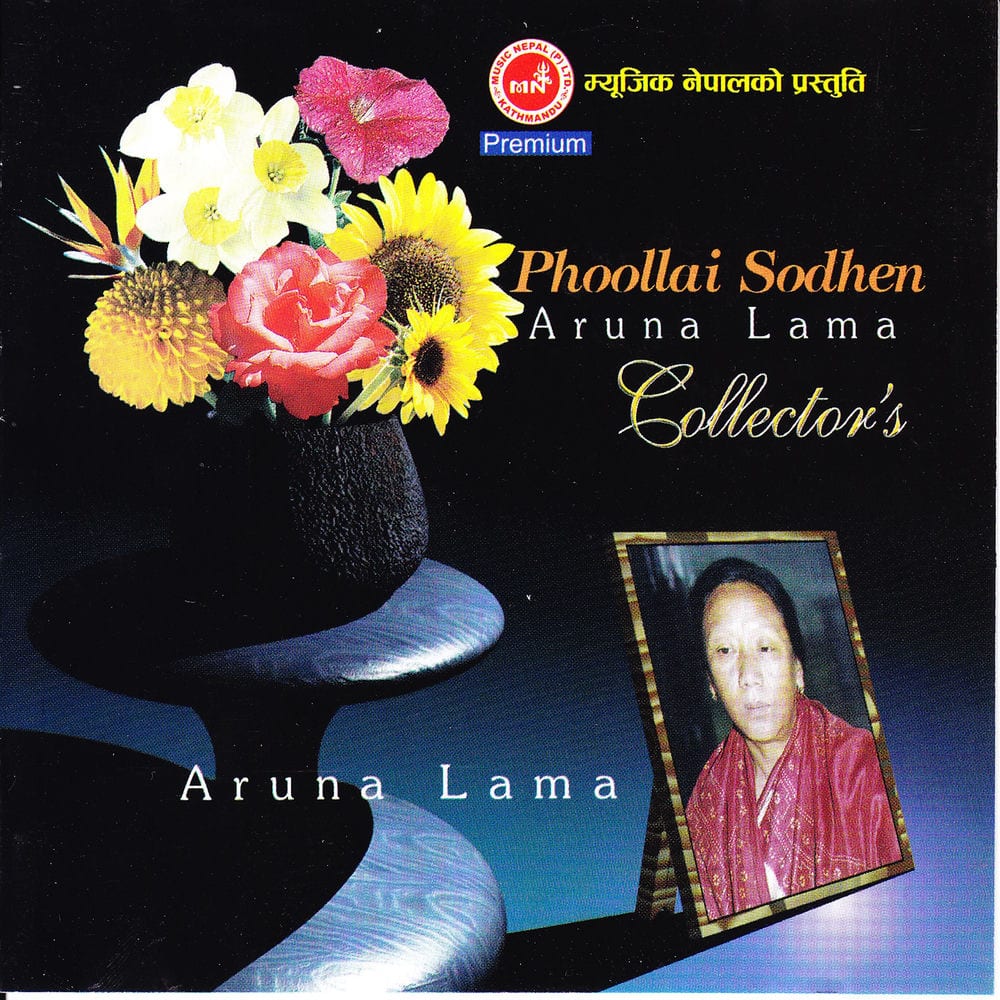
Aruna Lama, born on September 9, 1945 in Darjeeling, feels unexpectedly current right now, as her classic Nepali songs slip into lo-fi and nostalgia playlists for a new wave of listeners. With around 1,000 monthly plays and thousands of scrobbles, her voice is quietly resurfacing, not through hype but through that slow, word-of-mouth sharing that suits her intimate style.
Known as the “Nightingale of the Hills, ” she became a voice for Nepalese people long before streaming numbers existed, starting to sing at just seven years old. Today, tracks like “Pohar Saal Khushi Fatda” and “Himal Sari” sit comfortably beside modern lo-fi and nepali cuts on Spinn Radio, proof that her softness and emotional clarity still cut through compressed speakers and crowded feeds.
Key facts
- Monthly listeners
- 1.0K
- Total scrobbles
- 12.9K
- Genres
- nepali, All, Lo-Fi, nepal
- Signature tracks
- Pohar Saal Khushi Fatda, Himal Sari, Khola Ka Tiraima, Yetidherai, Aakha Haru Sita Maile
Who was Aruna Lama and why her story matters now
Aruna Lama’s biography is as important to her music as her tone. Born on September 9, 1945 in Darjeeling, India, she grew up within the Nepali-speaking world while physically outside Nepal’s borders. That duality, belonging and distance at once, runs through the melancholy edges of songs like “Khola Ka Tiraima” and “Yetidherai, ” where longing feels woven into every melodic turn.
She began singing at the age of seven, which helps explain the natural ease in her phrasing. There is no sense of forcing technique in her recordings, only the feeling that she has lived with melody since childhood. That long relationship with song is part of why she became known as the Nightingale of the Hills, a title that signals how deeply she connected with listeners across the Nepali diaspora.
Her personal life shaped her career in a very direct way. On 11 July 1963 she married Saran Pradhan, a musician, lyricist and composer. After that, she became so busy with married life that she had far less time for singing professionally. The bittersweet detail for fans is that a voice powerful enough to become “the voice of the Nepalese people” recorded relatively little, which makes every surviving track feel precious.
“Every surviving Aruna Lama recording feels precious, because life pulled her away from the studio long before listeners were finished with her.”
What Aruna Lama’s Nepali sound actually feels like
Aruna Lama is often filed simply as “nepali, ” but that label barely covers what you hear in her best-known recordings. There is a poised, lyrical quality to her delivery, rooted in classic Nepali songcraft yet soft enough to sit next to modern lo-fi playlists without clashing. Her catalog appears today under genre tags like nepali, Lo-Fi and even “All, ” a shorthand for how comfortably her tracks cross mood and format lines.
Listen closely to “Pohar Saal Khushi Fatda” and you get a good sense of her range. The melody moves with a gentle inevitability, never showy, while her voice rides on top with an almost conversational intimacy. You feel as if you are being spoken to, not performed at. On “Himal Sari, ” the title alone pulls in the image of mountains, and her vocal tone mirrors that altitude: clear, cool, and slightly distant, like sound carrying across a valley.
That quality is what lets her old recordings sit alongside contemporary nepali and lo-fi tracks from acts such as 1974 AD or Deep Shrestha without feeling anachronistic. If you enjoy reflective Nepali rock or softer ballads from artists like 1974 AD, Aruna Lama’s songs will feel like the emotional roots of that same tree.
“Her voice is so intimate that it feels less like a performance and more like a late-night conversation over the radio.”
Spinn Radio
Listen to Aruna Lama on Spinn Radio
Essential Aruna Lama songs to start with
If you are new to Aruna Lama, start with “Pohar Saal Khushi Fatda.” It is one of her signature tracks and a perfect entry point into her world, balancing accessible melody with an emotional depth that rewards repeat listens. You can hear why listeners across the Nepali-speaking hills once treated her as a daily companion rather than a distant star.
Next, queue up “Himal Sari.” Even without knowing the lyrics, the track communicates a mountain-scale sense of space and solitude. The arrangement leaves room for her voice to breathe, which makes every inflection land harder. It is the kind of song that feels perfectly at home on a rainy evening or on a long bus ride with headphones on.
For a different emotional shade, try “Khola Ka Tiraima” and “Yetidherai.” Both carry a flowing, river-like movement that suits the titles and showcases how gracefully she can stretch and release a phrase. Finally, “Aakha Haru Sita Maile” is essential listening if you want to understand why she was called the Nightingale of the Hills, with a vocal line that lingers long after the final note fades.
“Start with “Pohar Saal Khushi Fatda, ” stay for “Himal Sari, ” and you will quickly understand why listeners called her the Nightingale of the Hills.”
How Aruna Lama fits with Narayan Gopal, Tara Devi and peers
To place Aruna Lama in context, think of her alongside other pillars of Nepali music such as Narayan Gopal, Tara Devi, Ambar Gurung, 1974 AD and Deep Shrestha. Each represents a different facet of the same musical culture, with her voice occupying the poetic, deeply emotive corner. Where Narayan Gopal often stands as a reference point for male vocal gravitas, Aruna Lama offers an equally resonant female counterpart, lighter in timbre but just as affecting.
Her connection to musicians and composers runs right through her personal life. She married Saran Pradhan, himself a musician, lyricist and composer, which situates her within a creative network that helped define eras of Nepali song. While the specifics of who wrote or arranged individual tracks vary, knowing that her household revolved around music helps explain the cohesion in her recordings.
If you are exploring Nepali catalogues on Spinn Radio, a rewarding path is to move between her work and that of peers. Try pairing her songs with Narayan Gopal’s catalog, then shift to the more band-driven sound of 1974 AD, or the classic style of Tara Devi. You will hear how Aruna Lama’s intimate, hill-born sensibility threads quietly through very different approaches.
“Think of Aruna Lama as the intimate, poetic corner of the same Nepali sound-world that gave us Narayan Gopal and Tara Devi.”
Why Aruna Lama still resonates in today’s lo-fi era
On paper, it might sound surprising that a singer who became busy with married life in the 1960s now appears under genre tags like Lo-Fi on streaming platforms. In practice, one listen makes it obvious. Her recordings are warm, slightly raw, and driven more by mood than by studio polish, which fits perfectly with modern lo-fi listening habits built around focus, memory and late-night introspection.
With around 1.0K monthly listeners and 12.9K total scrobbles attached to her name, Aruna Lama is not a viral juggernaut. She is something quieter and arguably more enduring: an artist people actively seek out, add to personal playlists, and pass along to friends. For many younger listeners, she functions as a gateway into classic Nepali music, a bridge between old hills and new headphones.
If you care about discovering where today’s Nepali and lo-fi moods come from, tuning in to “Pohar Saal Khushi Fatda, ” “Himal Sari, ” or “Aakha Haru Sita Maile” is not nostalgia. It is a way of hearing how a voice from Darjeeling in 1945 still shapes the emotional vocabulary of Nepali music in the present tense.
“In a lo-fi era obsessed with mood, Aruna Lama’s warm, unhurried recordings feel less like archives and more like secret new finds.”
Good to know
Frequently asked questions
Who is Aruna Lama?
Aruna Lama was a highly renowned and talented Nepali singer known as the Nightingale of the Hills. She became the voice of the Nepalese people with songs that charmed listeners across generations.
When was Aruna Lama born?
Aruna Lama was born on September 9, 1945 in Darjeeling, India. Her birth in Darjeeling placed her at the heart of the Nepali-speaking hill communities that later embraced her music.
What are the most famous songs by Aruna Lama?
The most famous songs by Aruna Lama include “Pohar Saal Khushi Fatda, ” “Himal Sari, ” “Khola Ka Tiraima, ” “Yetidherai, ” and “Aakha Haru Sita Maile.” These tracks are a strong starting point for anyone exploring her catalog on streaming platforms.
What genre is Aruna Lama’s music?
Aruna Lama’s music is primarily Nepali, and it is now also tagged under Lo-Fi and broader “All” categories on streaming services. Those genre labels reflect how her intimate, classic recordings fit modern mood-based listening alongside other nepali and lo-fi tracks.
Who was Aruna Lama married to?
Aruna Lama was married to Saran Pradhan, a musician, lyricist and composer, on 11 July 1963. After their marriage she became so busy with family life that she had much less time for her singing career.
Explore more on Spinn Radio: Narayan Gopal · Tara Devi · Ambar Gurung · 1974 AD
Shop the story
Gear for Music Lovers
 Editor's Pick
Technics Premium Class Hi-Fi Turntable
Coreless direct-drive record player
$1,399.99
View on Amazon
Audio-Technica AT-LP120XUSB
Direct-drive USB turntable
$399.00
View on Amazon
Yamaha HS5 Studio Monitors (Pair)
Powered near-field studio monitors
$339.98
View on Amazon Bestseller
Sony WH-1000XM5
Noise-canceling headphones
View on AmazonAs an Amazon Associate, Spinn Radio earns from qualifying purchases.
Browse the full Spinn Shop →