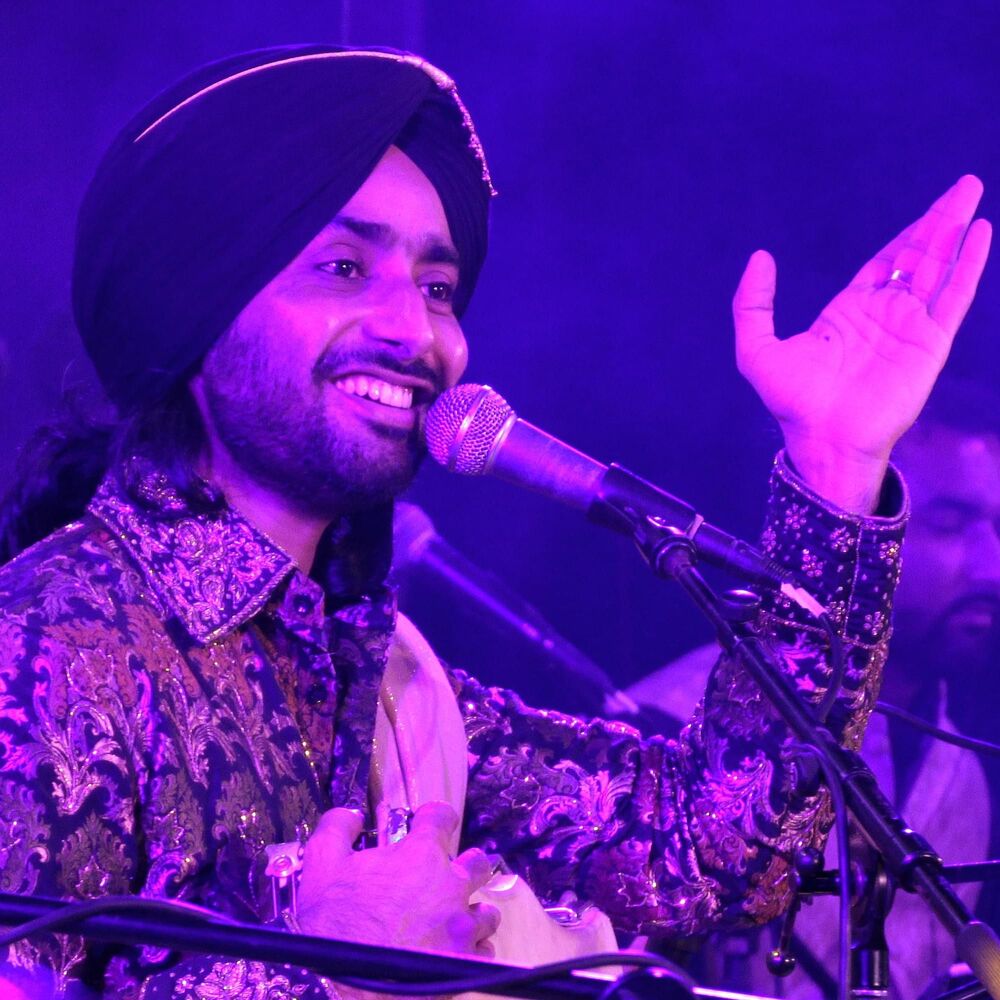
Kaushiki Chakraborty matters right now because she makes Hindustani classical music feel startlingly present. With just 3.4K monthly listeners and 17.6K total scrobbles on streaming, she still feels like a discovery, yet her command of raga, thumri and dadra puts her in the lineage of the great vocalists that shaped the form.
Her recordings move easily between pure Hindustani classical and the wider currents of Indian and World Music, and that flexibility is exactly what makes her such a compelling listen on Spinn Radio. Whether she is unfolding a thumri in Keherva or coloring a Bengali song with classical nuance, Chakraborty offers a way into the tradition that is both technically exacting and instantly emotional.
Key facts
- Monthly listeners
- 3.4K
- Total scrobbles
- 17.6K
- Genres
- indian classical, World Music, hindustani classical, vocalist, Hindustani classical music
- Signature tracks
- Ruthey Naina, Ay Tobe Shohochori, Thumri in Raga Misra Mand 'Morey Saiyan Bedardi'
How Kaushiki Chakraborty’s sound bridges Hindustani classical and World Music
Kaushiki Chakraborty is rooted in Hindustani classical music, yet her catalog sits comfortably under both “indian classical” and broader “World Music” tags. At heart she is a vocalist who works within raga grammar, but she shapes each phrase with a lyrical sensibility that feels accessible even if you have never studied a taal cycle in your life.
Listen closely and you hear how she balances structure and emotion. In bandish and thumri alike, she treats the raga not as a rigid framework but as a landscape to move through, letting slow, carefully curved lines bloom into fast, intricate runs. That combination of clarity and agility is what makes her voice so compelling, whether she is singing a contemplative khayal-style piece or a romantic dadra.
For listeners coming from non‑classical backgrounds, her placement in the World Music space is a gift. You can approach her songs the way you might approach any strong vocal performance: hear the mood first, notice the raga later. The genres on her profile are a roadmap: start with “hindustani classical” if you want depth, pick “World Music” if you want a gateway.
“She treats the raga not as a rigid framework but as a landscape to move through.”
Where to start: Kaushiki Chakraborty songs to play first
If you want to know what Kaushiki Chakraborty can do in a single track, queue “Ruthey Naina.” It is one of her signature recordings, built around longing and unresolved emotion. The melodic line leans into that ache, with phrases that circle back on themselves like a mind stuck on a memory, and her control of micro‑intonation makes every return land a little differently.
For a different side of her artistry, try “Ay Tobe Shohochori.” The song brings her classical training into a more song‑like, immediately melodic space. You still hear the precision in her ornamentation, but the overall feel is lighter and more conversational, which makes it a strong bridge for listeners who might be more familiar with Bengali or World Music vocal traditions than with strict raga performance.
On the more purely classical end of the spectrum sit three cornerstone tracks. “Thumri in Raga Misra Mand 'Morey Saiyan Bedardi' in Keherva (8 beats)” is a textbook introduction to how she handles thumri: playful, romantic, rhythmically buoyant over the 8‑beat Keherva cycle. “Yaad Piya Ki Aaye” dives deep into separation and remembrance, while “Sajanwa Kab Aaoge - Dadra in Raga Pahadi - Raga - Pahadi - Taal - Dadra (Live)” presents her in a live dadra setting, where the lilting Pahadi raga and 6‑beat dadra taal let her stretch phrases in real time. Together, these tracks sketch out her range from studio polish to stage spontaneity.
“If you want to know what she can do in a single track, queue “Ruthey Naina.””
Spinn Radio
Listen to Kaushiki Chakraborty on Spinn Radio
Inside the ragas and taals: what Kaushiki Chakraborty does technically
A big part of Kaushiki Chakraborty’s appeal is how clearly she illuminates the architecture of Hindustani classical music. In “Thumri in Raga Misra Mand 'Morey Saiyan Bedardi' in Keherva (8 beats)”, she works within Misra Mand, a raga that allows mixed notes, which gives her room for shade and surprise. Set to Keherva, an 8‑beat rhythm popular in semi‑classical and light classical forms, the track becomes a masterclass in how to float above a groove while still landing every sam (downbeat) with precision.
“Sajanwa Kab Aaoge - Dadra in Raga Pahadi - Raga - Pahadi - Taal - Dadra (Live)” shows another side of her technical command. Raga Pahadi has a folk‑tinged, mountain feel, and pairing it with dadra, a 6‑beat taal, lets her play with lilt and swing. In the live setting you can hear her interact with the rhythmic framework in real time, stretching and compressing phrases just enough to create tension without ever breaking the cycle.
For anyone curious about how taals actually feel in the body rather than on a theory page, these two tracks are essential. You can tap out the counts of Keherva or dadra on your knee and hear exactly how she places each phrase, which turns abstract concepts like raga and taal into something instantly tangible.
“She turns abstract concepts like raga and taal into something you can feel in your pulse.”
Kaushiki Chakraborty’s place in a vocal lineage of masters
Kaushiki Chakraborty does not exist in isolation. Her work sits in conversation with a long line of Hindustani vocalists. The related artist Ajoy Chakrabarty stands as a direct reference point for serious listeners, connecting her to a rigorous gharana‑based approach where raga grammar and emotional delivery are equally important. Exploring Ajoy Chakrabarty alongside her catalog helps you hear how a shared tradition can branch into distinct voices.
You can also place her alongside towering figures like Bade Ghulam Ali Khan, whose influence on thumri and khayal singing still defines how many vocalists approach the form. Checking his page on Spinn through Bade Ghulam Ali Khan and then returning to her “Morey Saiyan Bedardi” makes the continuity between generations feel very real. The same goes for Prabha Atre, another key vocalist whose name appears among her related artists and whose work sets a benchmark for clarity and inventiveness.
There is also a collaborative angle. The linked project Kaushiki Chakrabarty, Yogesh Samsi, Brajeshwar Mukherjee, Yogesh Dutt situates her among respected accompanists and peers. Hearing her interact with artists like Yogesh Samsi on percussion underlines how responsive her style is to the musicians around her, a key trait for any great Hindustani vocalist.
“Her recordings feel like a live conversation with the lineage that shaped her.”
Why you should tune into Kaushiki Chakraborty right now
For listeners who care about vocal craft, Kaushiki Chakraborty offers the kind of control and nuance that rewards close, repeated listening. Tracks like “Ruthey Naina” and “Yaad Piya Ki Aaye” unfold slowly; each time you return, another small inflection or shift in dynamics jumps out, which is why her relatively modest 17.6K scrobbles feel like a starting point rather than a ceiling.
If you are new to Hindustani classical music, her catalog doubles as an accessible primer. You get exposed to key forms like thumri and dadra, to essential taals such as Keherva and dadra, and to evocative ragas like Misra Mand and Pahadi, all without needing any prior theory. You can come in for the emotion of “Ay Tobe Shohochori” and gradually find yourself curious about why Misra Mand feels different from Pahadi.
For more seasoned fans, she is a contemporary vocalist worth following closely alongside names like Ajoy Chakrabarty, Bade Ghulam Ali Khan, Prabha Atre and Anup Ghoshal. Her presence across “indian classical, ” “hindustani classical” and “World Music” tags hints at how flexible this tradition really is. Put simply, pressing play on Kaushiki Chakraborty is a way to hear a living, evolving Hindustani voice working at a very high level right now.
“Pressing play on Kaushiki Chakraborty is a way to hear a living, evolving Hindustani voice at a very high level.”
Good to know
Frequently asked questions
Who is Kaushiki Chakraborty?
Kaushiki Chakraborty is an Indian Hindustani classical vocalist whose music appears under indian classical, hindustani classical and World Music genres. She is known for expressive raga, thumri and dadra performances.
What genre is Kaushiki Chakraborty?
Kaushiki Chakraborty performs primarily in Hindustani classical music, and her work is also tagged as indian classical, World Music and vocalist. These overlapping tags reflect how her traditional training reaches global listeners.
Which are Kaushiki Chakraborty signature songs?
Kaushiki Chakraborty’s signature tracks include Ruthey Naina, Ay Tobe Shohochori, Thumri in Raga Misra Mand 'Morey Saiyan Bedardi' in Keherva (8 beats), Yaad Piya Ki Aaye and Sajanwa Kab Aaoge - Dadra in Raga Pahadi - Taal - Dadra (Live). These songs show her range from intimate studio work to expansive live performance.
How many listeners does Kaushiki Chakraborty have?
Kaushiki Chakraborty has 3.4K monthly listeners and 17.6K total scrobbles on streaming platforms. Those numbers underline her status as a still‑emerging yet highly accomplished classical voice online.
Why should I listen to Kaushiki Chakraborty?
You should listen to Kaushiki Chakraborty for her blend of rigorous Hindustani classical technique and instantly emotional singing. Tracks like Ruthey Naina and Morey Saiyan Bedardi make complex raga and taal structures feel deeply human and approachable.
Explore more on Spinn Radio: Kaushiki Chakrabarty, Yogesh Samsi, Brajeshwar Mukherjee, Yogesh Dutt · Ajoy Chakrabarty · Bade Ghulam Ali Khan · Prabha Atre