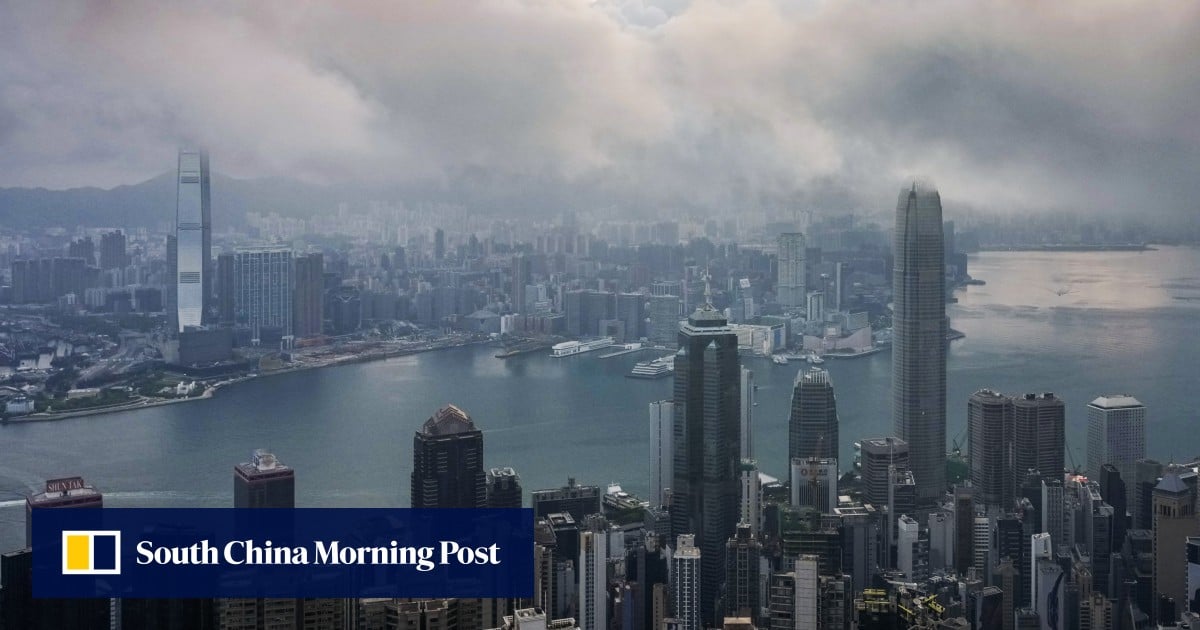
Hong Kong ranks No 2 in global competitiveness with best showing in 7 years, according to a June 18 report from the South China Morning Post citing a survey of 70 economies by Switzerland-based International Institute for Management Development. The city now trails only Singapore, marking its strongest performance in the IMD assessment in seven years and putting its economic repositioning back in the global spotlight.
The result matters because it signals how investors, policymakers, and rival financial hubs may reassess Hong Kong’s role in global trade and capital flows right now. With Singapore holding the top spot, the competition between the two Asian hubs is sharpening again, and the latest ranking gives Hong Kong fresh leverage as it tries to convince businesses and talent that its long-term fundamentals are stabilising.
Key facts
- Source
- South China Morning Post
- Reported
- June 18, 2026
- Desk
- world
- Follow the story
- Spinn Radio Talk
What the new IMD ranking actually says about Hong Kong
According to the South China Morning Post, Hong Kong has climbed to No 2 in the latest global competitiveness table compiled by the Switzerland-based International Institute for Management Development, out of 70 economies surveyed. That single detail already tells us two things: Hong Kong is being assessed alongside a wide field of developed and emerging markets, and its improvement is not marginal but visible at the very top of the table.
The city’s performance is described as its best showing in seven years, which suggests that Hong Kong has spent much of the past decade trying to regain lost ground in the IMD framework. While the underlying indicators are not detailed in the reporting, IMD’s competitiveness work typically weighs economic performance, government effectiveness, business efficiency, and infrastructure. A move up to second place, especially with Singapore ranked first, signals that Hong Kong’s overall profile across those pillars has strengthened relative to many of its peers.
For investors tracking global rankings, the practical takeaway is clear: Hong Kong has re-entered the very top tier of IMD’s competitiveness map, just behind Singapore and ahead of 68 other economies in the current survey.
“Hong Kong has re-entered the very top tier of IMD’s competitiveness map, just behind Singapore and ahead of 68 other economies.”
How Hong Kong’s No 2 spot compares with Singapore and other rivals
The South China Morning Post reports that Singapore holds first place in the IMD survey, with Hong Kong following in second. That framing turns the ranking into an immediate comparison between two regional rivals that often compete to host the same capital, corporate headquarters, and skilled workers. For global firms choosing an Asian base, the IMD table now reads as a reminder that both cities sit at the pinnacle of measured competitiveness among 70 economies.
Although the detailed score gap is not provided, the basic order still matters. Singapore’s lead confirms its status in the IMD view as the most competitive economy in the current cycle. Hong Kong’s second place, and its best level in seven years, shows that it has closed distance on top-tier peers rather than slipping further down the list. For competing hubs elsewhere, from other parts of Asia to Europe and North America, this pairing of Singapore at No 1 and Hong Kong at No 2 underscores the continuing pull of Asia’s city economies in debates about where global business will orient next.
For decision-makers weighing regional strategies, the immediate takeaway is that any serious Asia plan needs to account for both Singapore and Hong Kong, with IMD’s ranking now reinforcing the perception that they form a two-city benchmark for competitiveness.
Spinn Radio
Follow live news on Spinn Radio
Why this is Hong Kong’s best competitiveness result in 7 years
The South China Morning Post explicitly frames this year’s IMD outcome as Hong Kong’s best showing in seven years. That timeline matters because it hints at a period in which the city had ranked lower and was working to rebuild its reputation among international analysts. A seven-year high suggests that, within IMD’s methodology, recent shifts in policy, market conditions, or business sentiment have finally translated into measurable gains.
While the report does not set out a year-by-year ladder, describing the latest ranking as a “best showing in 7 years” invites comparison with earlier periods when Hong Kong was seen as more vulnerable to competitive pressure. It also marks a psychological turning point for local stakeholders who track such benchmarks as a proxy for how the world sees the city. A climb back to No 2 sends a simple signal: whatever the previous trajectory, the IMD view is that Hong Kong’s relative competitiveness has improved on a multi-year horizon.
For observers trying to read the direction of travel rather than a single snapshot, the key takeaway is that IMD’s assessment points to a medium-term uptrend, not a one-off spike, in how Hong Kong stacks up against 69 other economies.
“A seven-year high turns the IMD ranking from a static snapshot into a story about Hong Kong’s competitiveness trend line.”
What is at stake for Hong Kong’s economy and global role now
Rankings alone do not decide economic outcomes, but they shape expectations. A No 2 global competitiveness position, reported by the South China Morning Post and anchored in the IMD survey, gives Hong Kong a fresh argument as it pitches itself to multinational firms, investors, and regional headquarters. It suggests that the city’s overall environment compares favourably with almost every other market in the 70-economy sample, which can influence where new capital is deployed or where specialised teams are based.
This also feeds into how financial markets and policymakers frame Hong Kong’s role in the next phase of globalisation. If IMD’s findings become part of the narrative among business leaders, boardrooms may revisit assumptions about whether to scale up or scale back their presence in the city. The result could affect demand for office space, professional services, and cross-border deal-making that runs through Hong Kong as a platform.
For everyday listeners following the story, the useful takeaway is that competitiveness rankings help set the tone for investment and jobs. A higher placement can strengthen Hong Kong’s hand in conversations about where regional and global business will cluster over the coming years.
What to watch next as the competitiveness story develops
This ranking is not the end of the discussion, it is the start of a new round of questions that markets and policymakers will now ask about Hong Kong. Analysts will be watching how long the city can hold onto its No 2 IMD slot, whether it can close any remaining gap with Singapore, and how other economies in the 70-strong field respond with their own policy shifts. Any future movement up or down the table will be scrutinised as a signal of whether this seven-year high was a peak or a staging post.
On the policy side, attention will focus on whether Hong Kong authorities treat the IMD result as validation of current strategies or as encouragement to push further reforms aimed at business conditions and long-term resilience. Because IMD’s work is recurring and comparative, the next release will be read against this year’s strong baseline. That gives both public and private actors a clear incentive to maintain or improve the city’s position.
For real-time reaction, market commentary, and political fallout, listeners can follow continuing coverage on Follow live news and talk on Spinn Radio, where the implications of Hong Kong’s No 2 ranking and its rivalry with Singapore will feature across live news and talk programming.
“This year’s No 2 ranking is not a finish line for Hong Kong, it is the baseline against which every next move will be judged.”
Good to know
Frequently asked questions
What is "Hong Kong ranks No 2 in global competitiveness with best showing in 7 years" referring to?
"Hong Kong ranks No 2 in global competitiveness with best showing in 7 years" refers to Hong Kong’s latest position in the International Institute for Management Development survey of 70 economies, as reported by the South China Morning Post. The city now trails only Singapore in that IMD competitiveness table.
Who reported that Hong Kong ranks No 2 in global competitiveness with best showing in 7 years?
The South China Morning Post reported that Hong Kong ranks No 2 in global competitiveness with best showing in 7 years. The story is carried on its world desk and cites the Switzerland-based International Institute for Management Development.
When was Hong Kong ranks No 2 in global competitiveness with best showing in 7 years reported?
Hong Kong ranks No 2 in global competitiveness with best showing in 7 years was reported on June 18, 2026. The recent headline from the South China Morning Post is dated June 18, 2026, with the development treated as current news.
Who ranked Hong Kong No 2 in global competitiveness with best showing in 7 years?
The Switzerland-based International Institute for Management Development ranked Hong Kong No 2 in global competitiveness with best showing in 7 years. The South China Morning Post reports that Hong Kong placed second out of 70 economies surveyed, behind Singapore.
How competitive is Hong Kong in the "Hong Kong ranks No 2 in global competitiveness with best showing in 7 years" story?
In the "Hong Kong ranks No 2 in global competitiveness with best showing in 7 years" story, Hong Kong is assessed as the second most competitive economy among 70 surveyed by IMD. It is described as the city’s best performance in seven years, with Singapore in first place.
Explore more on Spinn Radio: Follow live news and talk on Spinn Radio
Sources