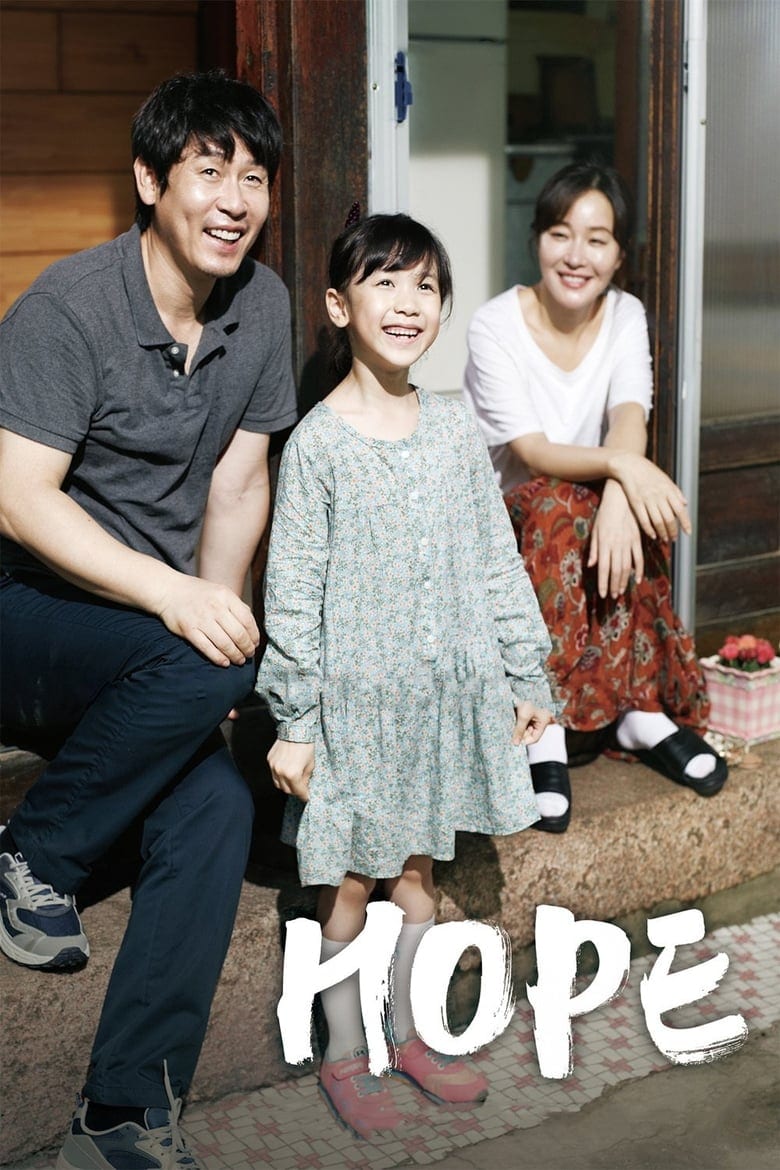
Hope feels painfully current this week, as headlines from the Times of India describe parents in Assam clinging to any “ray of hope” while they search for lost children after devastating floods. Lee Joon-ik’s 2013 drama is set in Korea, not India, but it understands that awful limbo all too well: the way a family’s world snaps in two when a child is hurt and nothing will ever be simple again.
In Hope, eight-year-old So-won survives a brutal sexual assault, and the film follows her and her parents as they struggle with hospitals, courts and their own anger. It is a drama about trauma, but also about the practical work of healing: who shows up, what they say, and how a little girl learns to walk back into a world that failed to protect her.
Key facts
- Released
- 2013
- Runtime
- 122 min
- Genres
- Drama
- TMDB rating
- 8.4/10
- Director
- Lee Joon-ik
- Starring
- Sul Kyung-gu, Uhm Ji-won, Lee Re, Kim Sang-ho, Kim Hae-sook
What is Hope (2013) about, really?
On paper, Hope sounds almost unwatchable: a crime so horrific that it made national news, an 8-year-old girl, and a justice system slow to respond. The film opens with So-won walking to school on a rainy morning. By the time her father reaches the hospital, their lives have been split into “before” and “after.” From that point on, the assault itself recedes. What matters is what it forces her parents to confront: rage at the offender, guilt at their own perceived failures, and the terrifying responsibility of helping a traumatized child feel safe again.
Director Lee Joon-ik keeps the focus tight on So-won and her family rather than turning this into a procedural or a revenge thriller. You remember the small, concrete beats: a father freezing outside a hospital curtain, a mother trying to hold eye contact when her daughter cannot bear to be touched, the first time So-won dares to leave her room. The plot tracks the slow, often awkward attempts to build a routine in the aftermath, so when hope appears, it arrives in gestures, not speeches.
If you are bracing for graphic exploitation, the key takeaway is this: Hope prioritizes the emotional fallout over the crime itself. It is still a tough sit, but the camera is more interested in So-won’s healing than in her suffering.
“Hope is less about the crime that breaks a family apart and more about the ordinary, clumsy acts of love that try to stitch it back together.”
Lee Joon-ik’s direction and why Hope hits so hard
Lee Joon-ik is known for character-focused Korean drama, and in Hope he strips his approach down to something almost documentary-like. There is no stylistic flourish to soften what happens to So-won. Hospital corridors are cramped and fluorescent, courtrooms feel indifferent, and the family’s apartment is both a refuge and a pressure cooker. That plainness lets the actors carry the weight.
The central cast is stacked with Korean heavy-hitters. Sul Kyung-gu and Uhm Ji-won play So-won’s parents, constantly oscillating between fury, helplessness and brittle cheerfulness for their daughter’s sake. Lee Re, as So-won, delivers the performance the entire film depends on: she flinches at sudden sounds, negotiates which adults are allowed near her, and clings to tiny rituals that help her feel in control. Around them, Kim Sang-ho and Kim Hae-sook flesh out the world of neighbors and relatives who either step up or shrink away.
What stands out is how little catharsis Lee allows. There is no single courtroom victory that fixes anything, no sweeping revenge scene. Progress comes in fragments: a walk to school, a shared joke, a night without nightmares. If you are drawn to dramas that sit with discomfort rather than rushing past it, Lee’s style in Hope is the main reason to watch.
“Progress in Hope comes in fragments: a walk to school, a shared joke, a night without nightmares.”

Spinn Radio
Watch Hope on Spinn Radio
How the cast of Hope turns a social issue into a family story
Hope has a clear social conscience, but it works first as a story about three people trapped in a situation they did not choose. Sul Kyung-gu’s father is a revelation in how messy he is allowed to be. He is not a stoic hero. He rages at officials, makes clumsy decisions, and sometimes cannot even look at his daughter without breaking down. Uhm Ji-won gives the film its quiet backbone, bringing a steadier, more practical energy as a mother who cannot afford to collapse because her child needs consistency.
Lee Re has the film’s hardest job. So-won is young, wounded and often silent, yet the film never reduces her to a symbol. You see her preferences and flashes of stubbornness: the way she tests adults, the tiny negotiations she sets before she will accept kindness. That specificity keeps Hope rooted in one little girl’s experience rather than a generic “victim” arc.
If you have connected with performance-driven dramas about social trauma like Freedom Writers or the harrowing moral outrage of Mississippi Burning, you will find a different, more intimate angle here. Hope stays almost entirely inside the family apartment and hospital rooms, which makes every choice the parents make feel unbearably close.
“Hope keeps So-won from becoming a symbol; she is a stubborn, specific child rebuilding her own boundaries.”
Why Hope is so hard to watch and why people still recommend it
With a TMDB rating of 8.4/10 and a 122 minute runtime, Hope has clearly connected with audiences despite its subject. Part of that is because it acknowledges how ugly the surrounding systems can be. Adults gossip. Officials fumble. Some people wish the whole thing would go away so they can avoid discomfort. The film refuses to pretend that justice is swift or that public sympathy is simple.
At the same time, Hope is not pure despair. The title is earned through incremental acts of care. A parent learns how to approach their child without triggering panic. A community member, once passive, finds a concrete way to help. There are scenes of playfulness that feel almost shocking because of what you have seen before, and that dissonance is exactly the point.
If you come to cinema for escape, this is not the evening you are looking for. But if you seek dramas that respect both the scale of real-world violence and the dignity of survivors, Hope is one of the more honest treatments you will find. It is the film people quietly press on friends with a warning: this will hurt, but it matters.
“Hope is the film people quietly press on friends with a warning: this will hurt, but it matters.”
Who will appreciate Hope and what to watch next
Hope sits comfortably alongside other child-centered dramas that treat young characters with seriousness. If you were moved by François Truffaut’s focus on children in Small Change, or followed a young woman’s life over years in Suzanne, you will recognize that same respect for a child’s inner world here, even though Hope’s story is far more brutal.
Viewers who follow Korean cinema for its thrillers might be surprised by the restraint on display. Hope is a straight Drama, released in 2013, and its power comes not from plot twists but from sitting in rooms with these characters. If you care about performance, watch it for Sul Kyung-gu, Uhm Ji-won and especially Lee Re, and for how Kim Sang-ho and Kim Hae-sook quietly color the edges of the frame.
When the credits roll, you may find yourself thinking back to those current headlines about parents in crisis and systems under strain. That is the lingering effect of Hope: it sharpens how you read stories of real families in real newspapers, and it might change the way you notice the small, practical acts that help them endure.
Good to know
Frequently asked questions
When was Hope released?
Hope was released in 2013. It is a Korean drama that runs 122 minutes and focuses on a young survivor and her family.
Who directed Hope?
Hope was directed by Lee Joon-ik. His restrained, character-focused style keeps the story centered on So-won and her parents instead of sensationalizing the crime.
Who stars in the movie Hope (2013)?
Hope stars Sul Kyung-gu, Uhm Ji-won and Lee Re, with key support from Kim Sang-ho and Kim Hae-sook. Their performances ground the film’s heaviest moments in lived-in emotion.
What genre is Hope (2013)?
Hope is a drama. It uses a realistic, intimate tone to explore trauma, family and recovery rather than leaning into thriller or courtroom spectacle.
How long is the movie Hope?
Hope has a runtime of 122 minutes. That length gives the film space to follow So-won’s gradual healing and the emotional shifts inside her family.
Explore more on Spinn Radio: Mississippi Burning · Freedom Writers · Small Change · Suzanne