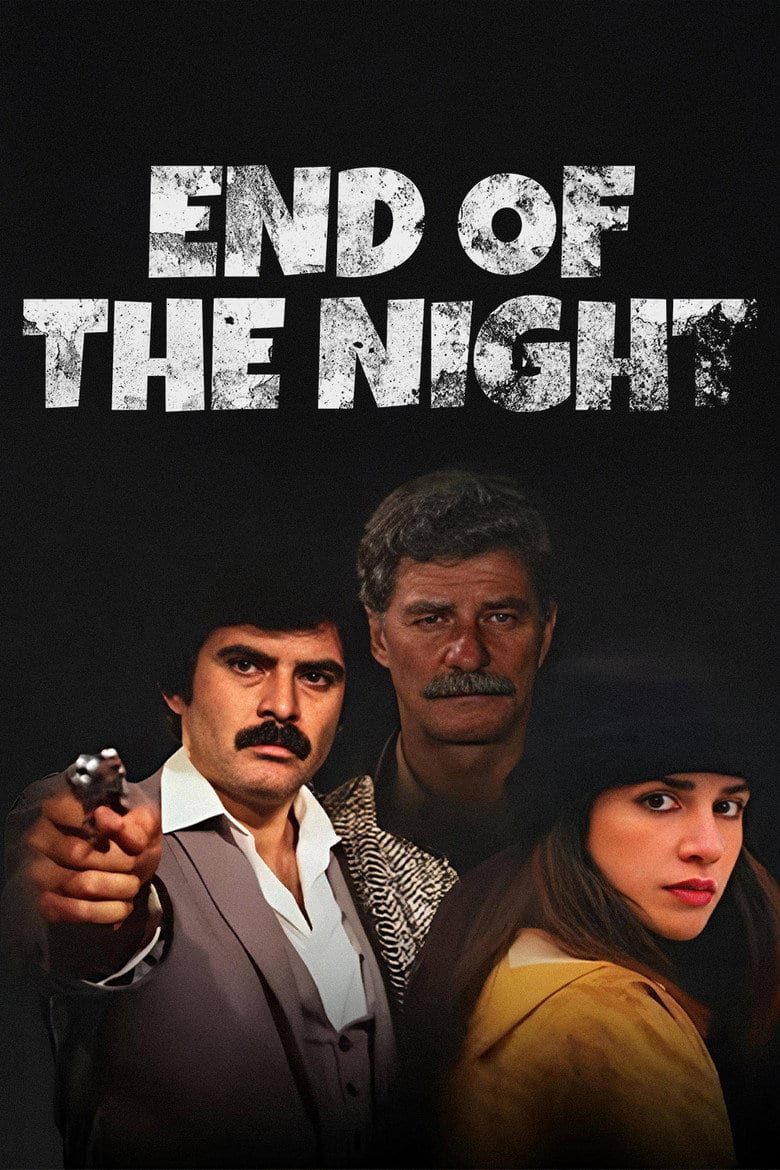
Gecenin Sonu is a 1983 Turkish action film that uses a father‑son gangster reunion to pick apart what happens when an old‑school killer walks out of prison and into a new criminal order. Directed by Natuk Baytan and headlined by Tarık Akan, it folds bruising action into a story about age, loyalty and the cost of trying to quit when no one believes you can.
Hasan, the aging ex‑enforcer at the center of the film, steps back into an Istanbul where heroin routes have shifted and young guns like Kadir rule the night. The result is not just shoot‑outs and street showdowns, but a tense collision between generations that fans of gritty 80s crime cinema will recognize instantly.
Key facts
- Released
- 1983
- Genres
- Action
- Director
- Natuk Baytan
- Starring
- Tarık Akan, Çiğdem Tunç, Ahmet Mekin, Nejat Gürçen, Nubar Terziyan
What is the story of Gecenin Sonu without big spoilers?
On paper, Gecenin Sonu is a straightforward crime plot. Hasan is a notorious gangster who has spent years working for Osman, a heroin smuggler whose operations depend on men like him. His wife becomes the fault line in that arrangement, pushing Hasan to leave the mafia and carve out a life that is not built on drug money and blood.
That decision does not stay private. Walking away from Osman’s network blows a hole in the smuggler’s business plans, and the retaliation is vicious. Osman's response destroys Hasan’s family and forces him into a killing he never wanted to commit, a moment that sends him to prison and freezes his life while the underworld keeps evolving without him.
By the time Hasan is released, he is elderly and the city’s criminal ecosystem has changed. Younger gangsters now dominate the trade, and among them Kadir stands out for the way he terrifies drug dealers. The film’s central tension comes from the clash between this feared younger enforcer and Hasan, the man who used to be what Kadir is now. The plot keeps that father‑son reunion at the core, but it filters it through ambushes, back‑room deals and the slow unwinding of old grudges.
“The film’s sting lies in watching an ex‑killer walk out of prison and realize the underworld moved on without him.”
Who made Gecenin Sonu and who you’ll see on screen
Gecenin Sonu was directed by Natuk Baytan, a filmmaker strongly associated with Turkish action cinema of the period. His touch is all over the film, from its focus on heroin smuggling and gangland codes to its unvarnished street‑level conflicts. The world Baytan builds around Hasan feels functional and dangerous, driven by profit and fear rather than by any romantic idea of the mafia.
Front and center is Tarık Akan, one of Turkish cinema’s most recognisable leading men. Here he shoulders a role that balances physical menace with emotional weariness, playing a gangster dragged back into a life he tried to abandon because the alternative was death. Opposite him, Çiğdem Tunç adds emotional texture around Hasan’s domestic world, helping sell why leaving the mafia ever seemed worth the risk.
The supporting cast is a roll call of familiar faces from the era. Ahmet Mekin, Nejat Gürçen and Nubar Terziyan round out a line‑up that makes the underworld of Gecenin Sonu feel populated by men and women who have been in this game for decades. If you are curious about how 1980s Turkish action cinema cast its gangsters and their families, this ensemble is a sharp snapshot.
“The cast feels like a cross‑section of 1980s Turkish crime cinema, from weary old enforcers to the ambitious young guns replacing them.”

Spinn Radio
Watch Gecenin Sonu on Spinn Radio
Why Gecenin Sonu hits different from other 1980s action films
Plenty of 1983 action movies hang their appeal on firepower and chase scenes. Gecenin Sonu leans on something more uncomfortable: the spectacle of an aging criminal discovering he has become obsolete. Hasan is not a fresh recruit, he is a man whose legend used to mean something, now trying to navigate a world where kids like Kadir are the ones making dealers flinch.
The film’s emotional hook is this generational friction. Kadir is described as a figure who strikes fear into drug dealers, a mirror of what Hasan once was. When the two finally move into each other’s orbit, it is not just a turf war, it is a fight over legacy and relevance. Viewers who like their action anchored in bruised pride and shifting power dynamics will find a lot to latch onto here.
Violence in Gecenin Sonu rarely feels stylised or weightless. The killing that sends Hasan to prison is something he does not want to commit, and that reluctance lingers over every later confrontation. The film wants you to see that every “hit” leaves a mark somewhere, whether on a family, a reputation or the man carrying the gun. That attention to consequence is what makes the story stick after the final showdown.
“This is less about racking up bodies and more about what it costs a man when every choice in his life has been violent.”
Who will love Gecenin Sonu today
If you gravitate to crime sagas driven by damaged men, Gecenin Sonu belongs on your watchlist. Fans of character‑first gangster films will appreciate Hasan’s arc from feared enforcer to tired ex‑con, and the way his attempt at a clean break detonates his life rather than saving it.
Viewers interested in Turkish cinema history will also find it rewarding. As a 1983 action film directed by Natuk Baytan and starring Tarık Akan, Çiğdem Tunç, Ahmet Mekin, Nejat Gürçen and Nubar Terziyan, it offers a concentrated hit of what mainstream local crime storytelling looked and felt like at the time. You get a heroin‑fueled plot, generational conflict, and a cast that defined an era.
Maybe most importantly, the film plays to anyone fascinated by father‑son stories that are too knotted to be sentimental. The reunion at its core comes after prison, betrayal and death, with both men hardened by different versions of the same business. If that kind of emotionally loaded confrontation is your thing, Gecenin Sonu gives you that tension wrapped inside an unapologetically pulpy action frame.
“Come for the 1983 action, stay for the uneasy father‑son reckoning that refuses to soften its edges.”
Good to know
Frequently asked questions
What year was Gecenin Sonu released?
Gecenin Sonu was released in 1983. It sits squarely in the early 1980s wave of Turkish action cinema.
Who directed Gecenin Sonu?
Gecenin Sonu was directed by Natuk Baytan. His direction keeps the focus on the gritty world of heroin smuggling and gangland power plays.
Who stars in Gecenin Sonu?
Gecenin Sonu stars Tarık Akan, Çiğdem Tunç, Ahmet Mekin, Nejat Gürçen and Nubar Terziyan. Their ensemble brings both the criminal world and family stakes to life.
What is the genre of Gecenin Sonu?
Gecenin Sonu is an action film. Its set‑pieces are grounded in a crime story about gangsters, heroin smuggling and a violent family rupture.
What is Gecenin Sonu about?
Gecenin Sonu is about a notorious gangster father and son reuniting after many years, against a backdrop of heroin smuggling and gangland conflict. Hasan’s attempt to leave the mafia triggers a tragedy that sends him to prison, setting up a later clash with feared young gangster Kadir.
Sources