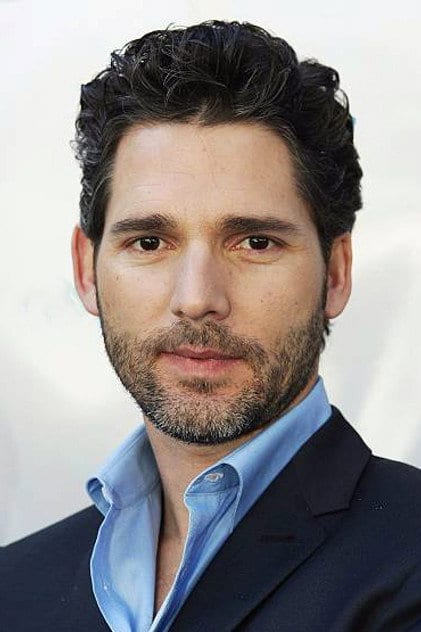
Eric Bana is one of those actors you recognize instantly, even if you first met him as the green-skinned Bruce Banner in Hulk or heard him without seeing him in Finding Nemo. Across more than four decades in front of the camera, he has shifted from sketch comedy in Melbourne to war epics, superhero horror, sci‑fi blockbusters and lean Australian thrillers.
What makes Bana worth revisiting now is how coherent that career looks in hindsight. Whether he is in the chaos of Black Hawk Down, the sand-and-spear spectacle of Troy, the retooled universe of Star Trek, or the parched outback of The Dry, he brings the same grounded, slightly off-center presence. If you are looking to line up a weekend of films that show what range actually looks like, he is a sharp place to start.
Key facts
- Known for
- Acting
- Born
- 1968-08-09
- Place of birth
- Melbourne, Australia
- Film credits
- 42
- Notable films
- Apex (2026), Finding Nemo (2003), Troy (2004), Black Hawk Down (2001), Hulk (2003), Star Trek (2009)
How Eric Bana went from Full Frontal to global film star
Before Hollywood came calling, Eric Bana was a comic. He started out on the Australian sketch-comedy series Full Frontal, a long way from the serious, haunted men he would later play. That early training shows in his timing and his comfort with tonal whiplash, especially when a role needs flashes of levity inside heavy material.
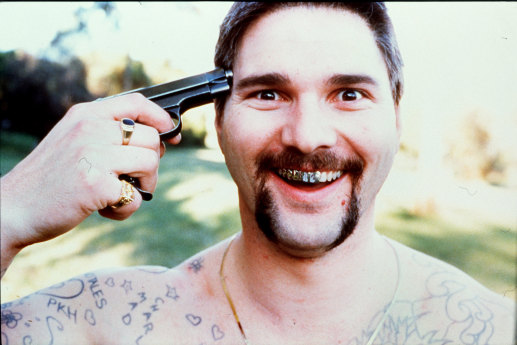
His breakout on the big screen arrived at home, in the 1997 comedy-drama The Castle, which first nudged him from TV familiarity into film. The key leap, though, was Chopper (2000), a biographical crime film that put him at the center of a volatile, real-life character and showed he could anchor a story without winking at the audience. If you want to see the hinge between “TV comic” and “serious actor, ” pairing Full Frontal clips with Chopper tells that story in high contrast.
By the time he reached American cinemas in Black Hawk Down (2001), he already had a decade of Australian work under his belt. The shift did not feel like a reinvention so much as a widening of the frame. That mix of Australian grounding and Hollywood scale has defined him ever since.
“That early sketch-comedy reflex gives Bana’s most serious performances a human looseness you do not always get in war films or superhero stories.”
Eric Bana in Black Hawk Down and Troy: why these war epics still work
If you only know Bana as Bruce Banner, start with Black Hawk Down (2001). The war film put him into a tense, ensemble-driven story where character has to cut through noise, smoke and chaos. Surrounded by military hardware and a stacked cast, he plays a soldier with a steady, unshowy calm. It is a good example of how he can make a supporting role feel oddly central by the way he occupies the frame.
He stayed in the realm of large-scale conflict with Troy in 2004, taking on Hector in a war epic rooted in myth but shot as muscular historical drama. Even next to sword-swinging heroes and larger-than-life kings, Bana’s Hector reads as the human center of the carnage, a fighter who still feels like a brother and son. If your taste runs to war movies that balance action with a strong emotional through-line, his work in Black Hawk Down and Troy is essential viewing.
For a focused double bill, watch Black Hawk Down for his modern-combat precision, then Troy to see how he handles honor and family duty inside a very different kind of battlefield.
“In both Black Hawk Down and Troy, Bana quietly steals war scenes from the explosions by playing the guy who feels like a real person inside the armor.”
Spinn Radio
Explore Eric Bana on Spinn Radio
Hulk and Star Trek: how Eric Bana slipped into genre mythology
Bana’s leap into the cultural mainstream came as Bruce Banner in Hulk (2003), a superhero horror film that treated its comic-book roots with unusual psychological intensity. Rather than playing Banner as a quippy scientist, he leaned into the character’s inner fracture, the man who is both terrified of and addicted to his own power. If you are curious what a pre-Marvel-boom superhero movie looked like when it took the monster inside seriously, Hulk is a fascinating artifact and still one of his most recognizable turns.
He re-entered fandom’s permanent memory in Star Trek (2009), playing Nero, a villain whose fury is written into the fabric of a rebooted sci‑fi timeline. It was a critical and commercial success, and Bana used his knack for stillness to make Nero’s menace feel controlled rather than cartoonish. For genre fans, it is a neat contrast with Hulk: in one he is the unstable center, in the other he is the external threat that bends the whole story around him.
If your watchlist leans heavily to sci‑fi and comic-book adaptations, lining up Hulk and Star Trek back to back gives you a compact tour of how Bana handles both sides of genre mythology, from tormented hero to implacable antagonist.
“Hulk showed Bana as the man at war with himself, while Star Trek let him weaponize that intensity as a force aimed straight at the heroes.”
From Munich to The Dry: Eric Bana’s grounded thriller streak
After the early-2000s blitz of war and genre films, Bana settled into a strong run of thrillers and dramas that leaned on his grounded presence. He took a leading role in Steven Spielberg’s historical thriller Munich (2005), which highlighted how closely he can play a character whose moral compass is under pressure. That talent for conflicted men kept pulling him toward stories that mix action with ethical tension.
In Lone Survivor (2013), he plays Lieutenant Commander Erik S. Kristensen, part of a real-life military story that asks you to keep track of tactics and human cost at the same time. A year later, in Deliver Us from Evil (2014), he shifted into horror as police Sergeant Ralph Sarchie, pushing through an investigation that marries procedural grit with something more supernatural. It is a good pick if you like your horror with uniforms, flashlights and cops who feel like they have actually worked a night shift.
Then, in 2020, he returned to Australia for The Dry, an outback thriller that strips away spectacle and leans on atmosphere and performance. Dry land, old secrets, and a lead who does not say much out loud might sound minimal, but that is where Bana excels. If you are browsing Spinn Radio for a tense, contemporary mystery rather than a blockbuster, The Dry is the Eric Bana film to queue first.
“The Dry shows what happens when you put Bana back on Australian soil, give him a secretive character and let the landscape do half the talking.”
Unexpected turns: Eric Bana in Finding Nemo and Apex
Amid all the soldiers, outlaws and tormented antiheroes, there are two resume entries that tell you a lot about Bana’s willingness to play in different sandboxes: Finding Nemo (2003) and Apex (2026). Finding Nemo folds him into one of Pixar’s most beloved oceans, turning his voice into a piece of a family animation classic. If you know him mainly from hardened live-action roles, hearing him in an all-ages underwater adventure is a reminder of his comedic roots and flexibility.
Looking ahead, Apex (2026) looms as a notable title among his 42 film credits, hinting that he is not done with large-scale or high-concept projects. You can already mark Apex on your Spinn Radio list via its page for Apex, then circle back to Finding Nemo for a different flavor of Bana. Together they show why he is difficult to pin to a single lane, which is exactly what keeps his filmography interesting to explore.
“Finding Nemo and Apex bookend a career that comfortably jumps from Australian crime and war zones to Pixar oceans and future-frontier stories.”
Good to know
Frequently asked questions
Who is Eric Bana?
Eric Bana is an Australian actor, comedian, producer and director known for roles in films like Hulk, Black Hawk Down, Troy and Star Trek. He began in sketch comedy on Full Frontal before moving into dramatic work in features such as Chopper and The Dry.
When was Eric Bana born?
Eric Bana was born on 9 August 1968. He was born in Melbourne, Australia and later became one of the country’s most internationally recognized film actors.
What are Eric Bana’s most famous movies?
Eric Bana’s most famous movies include Hulk (2003), Black Hawk Down (2001), Troy (2004), Star Trek (2009) and the outback thriller The Dry. He also appears in Finding Nemo (2003) and has a notable upcoming credit in Apex (2026).
How many films has Eric Bana been in?
Eric Bana has 42 film credits. Those credits span Australian features like Chopper and The Dry, major studio projects such as Hulk and Troy, and voice work in Finding Nemo.
What awards has Eric Bana received?
Eric Bana has received several Australian Film Institute awards. He was also appointed a Member of the Order of Australia (AM) in the 2019 Birthday Honours for his services to drama.
Explore more on Spinn Radio: Apex · Finding Nemo · Troy · Black Hawk Down
Sources