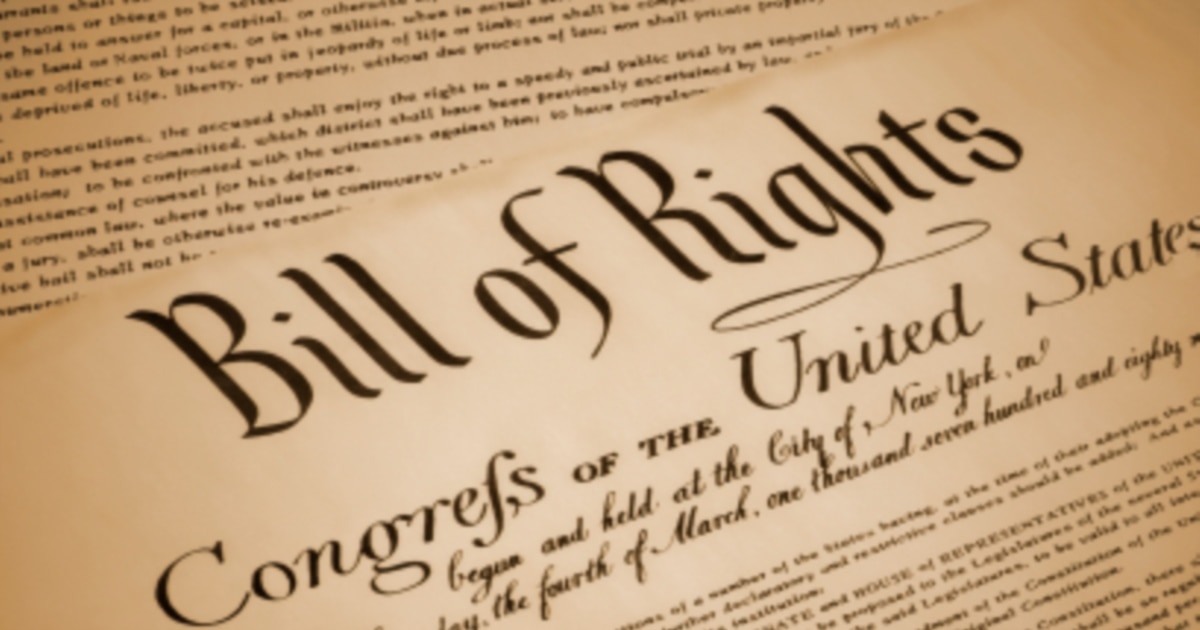
Amendments to the United States Constitution (version 2) is not a political podcast or a pundit’s take. It is the text itself, read aloud: the 27 amendments that still frame every argument about speech, weapons, privacy, and power in the United States.
In a moment when “What does the Constitution actually say?” has become a daily refrain, this compact LibriVox recording hands you the primary source in its simplest form. No commentary, no op-eds, just the language ratified starting in 1791, spoken into your headphones.
Key facts
- Author
- United States Government
- Genre
- *Non-fiction
- Published
- 1791
- Language
- English
- Chapters
- 5
What Amendments to the United States Constitution (version 2) actually contains
This audiobook collects all 27 amendments to the United States Constitution, from the first ten, known collectively as the Bill of Rights, through the seventeen later additions. The premise is brutally simple: each amendment, in order, read in English, with no dramatization and no editorial interruption. You hear the architecture of American law as it was written to clarify, correct, or restrain the original Constitution.
The recording reflects a historical arc that begins in 1791, when the first ten amendments were ratified simultaneously. Those initial amendments define many of the freedoms people casually reference, often without having encountered the actual sentences in full. The remaining seventeen amendments, ratified separately over time, mark later attempts to refine that foundational compromise. Listening straight through, you hear the Constitution not as a fixed monolith but as a work that keeps being argued with and amended.
The key takeaway is structural: ten amendments arriving as a single political bargain, then seventeen more, each forced into existence on its own terms. That rhythm of “all at once” followed by “one by one” is impossible to miss when you hear the text aloud.
“You hear the Constitution not as a fixed monolith but as a work that keeps being argued with and amended.”
Who “authored” the amendments and the era they come from
On the cover, the author is listed simply as the United States Government. It is an honest credit. These amendments are not the work of a single pen or a solitary philosopher. They are the product of a collective, formal process, recorded in official language, and adopted in the name of a government that was still defining itself when the first ten were published in 1791.
That date matters. 1791 places the Bill of Rights squarely in the aftermath of revolution, when the new republic was trying to reassure skeptics that federal power would not swallow local life or personal liberty. The fact that those first ten amendments were ratified simultaneously captures that mood. They arrived as a package of guarantees meant to steady a fragile system and answer urgent objections to the original Constitution.
Later amendments belong to different political moments, but the audiobook keeps them under the same institutional byline: United States Government. The effect is to remind you that constitutional change is an official act, not a footnote. Even when the language sounds remote, each line is the recorded outcome of an argument strong enough to reword the nation’s foundational document.
“These amendments are the recorded outcome of arguments strong enough to reword the nation’s foundational document.”
Spinn Radio
Listen to Amendments to the United States Constitution (version 2) on Spinn Radio
Why this compact non-fiction audiobook still feels urgent
Filed under *Non-fiction, the LibriVox edition of Amendments to the United States Constitution (version 2) might sound like homework at first glance. In practice, it plays like a lean, high-stakes script. The questions it encodes are the same ones that drive today’s headlines: Who gets to speak? Who gets to vote? How far does government power reach, and what happens when it overreaches?
Because the text is short and precise, you can hear how much hangs on a single phrase. The separation between the ten original guarantees and the seventeen later amendments underscores how political pressure accumulates, then breaks through in formal change. You do not need a law degree to grasp that pattern. You just need to notice when the language shifts, when new rights are added, when limitations suddenly appear.
The enduring appeal of this recording is its utility. Any time a public argument turns on “constitutional rights, ” you can return to this audiobook and check what those rights actually sound like. The fact that everything fits comfortably into one listening window makes it a realistic habit, not an aspirational civics project.
“This plays less like a textbook and more like a lean script where every clause still has consequences.”
What the listening experience of version 2 is like
As an audiobook, Amendments to the United States Constitution (version 2) is all focus and no ornament. There are 5 chapters, which break the text into manageable sections without disrupting the chronological logic. That structure lets you treat the amendments as a series of short, repeatable tracks instead of one undifferentiated block of legal prose.
The language is formal but surprisingly listenable. Read aloud, the sentences reveal a cadence that is easy to miss on the page. You start to notice how often a right is stated in simple terms, then narrowed or clarified through careful repetition. Heard through headphones, those patterns become a kind of rhythm, a legal meter that rewards close listening.
Practically, the biggest advantage of this version is portability. Because the text is compact, you can listen in a single sitting, or in five short chapter sessions, and come away with the entire amendment structure fresh in your memory. It is not background audio. It is the kind of recording you pause, replay, and perhaps annotate in your head as you walk.
“The 5 chapters turn constitutional law into a set of short, repeatable tracks you can actually finish.”
How to use this audiobook as a living reference
One of the quiet strengths of Amendments to the United States Constitution (version 2) is that it doubles as a reference tool. You can treat it as a one-time listen to understand the broad arc from the Bill of Rights onward. Or you can revisit specific chapters when a particular amendment is being debated, and hear exactly how it was written.
Because it is a straightforward recording with no added commentary, it stays current by staying neutral. Every new controversy sends people back to the same 27 amendments. This version gives you those 27 in clear audio, in original English, ready to check against whatever interpretation you encounter elsewhere.
If you remember nothing else, remember this: all of the familiar arguments about “constitutional rights” trace back to a set of sentences you can hear, start to finish, in the span of a short audiobook. That is the power of keeping the United States Government’s most consequential edits in your regular listening rotation.
“All the arguments about “constitutional rights” reduce to sentences you can hear in a single, compact listen.”
Good to know
Frequently asked questions
Who wrote Amendments to the United States Constitution (version 2)?
Amendments to the United States Constitution (version 2) is authored by the United States Government. The audiobook presents the official amendment text, not a private writer’s interpretation.
What genre is Amendments to the United States Constitution (version 2)?
Amendments to the United States Constitution (version 2) is classified as *Non-fiction. It functions as a primary historical and legal document in audio form.
When was the text behind Amendments to the United States Constitution (version 2) first published?
The text behind Amendments to the United States Constitution (version 2) was first published in 1791. That year marks the ratification of the initial set of amendments known as the Bill of Rights.
How many chapters are in Amendments to the United States Constitution (version 2)?
Amendments to the United States Constitution (version 2) contains 5 chapters. The divisions make the 27 amendments easier to navigate and revisit as needed.
What language is Amendments to the United States Constitution (version 2) in?
Amendments to the United States Constitution (version 2) is in English. The formal legal phrasing gains clarity when heard aloud in the original language.
Sources